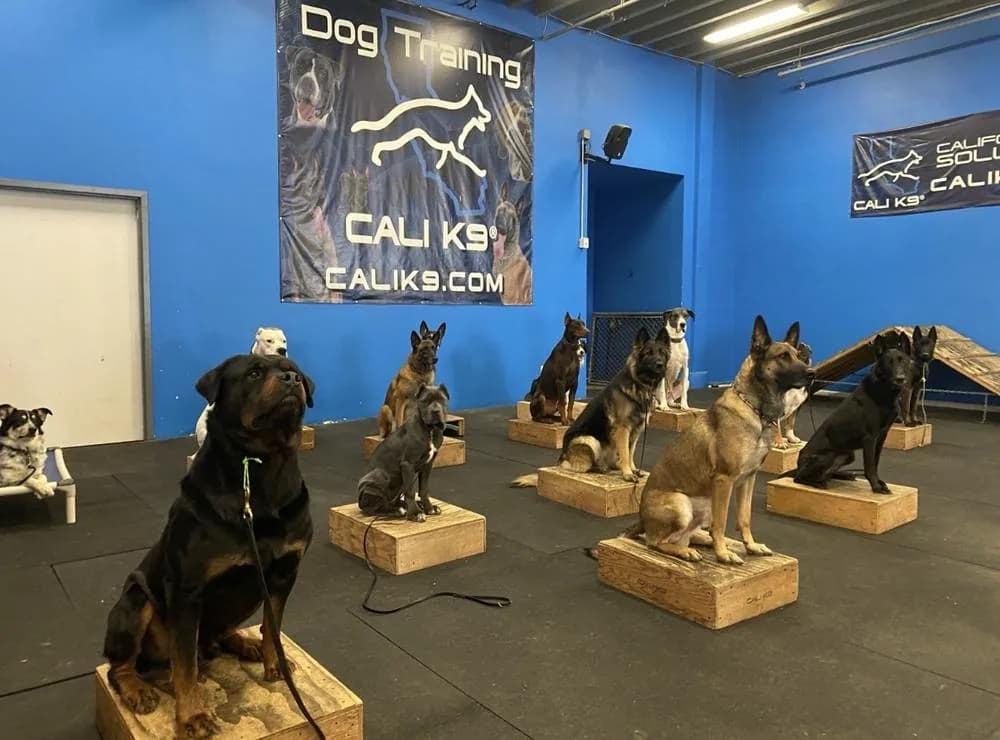
Dog aggression is the single most common reason owners seek professional help. It's also one of the most misunderstood behavioral issues in the dog training world. After 15 years and over 10,000 dogs trained at Cali K9, I can tell you this: there are no bad dogs. There are only misunderstood ones.
If your dog is showing signs of aggression — growling, snapping, lunging, or biting — you're probably feeling a mix of fear, frustration, and guilt. You might even be wondering if your dog is “fixable.” The answer, in nearly every case, is yes. But the approach matters more than most people realize.
WHAT ACTUALLY CAUSES AGGRESSION IN DOGS
Aggression is not a personality trait — it's a behavioral response. Every aggressive dog is reacting to something: fear, pain, insecurity, resource competition, or territorial pressure. Understanding the root cause is the first and most critical step in solving the problem.
In our experience, aggression typically falls into one of these categories:
- Fear-based aggression — The most common type. Your dog feels threatened and reacts defensively. This often looks like a dog that barks and lunges at other dogs or strangers on walks, but cowers or retreats when actually confronted.
- Territorial aggression — Your dog guards the home, yard, car, or even you. Delivery drivers, guests, and other animals trigger an intense protective response.
- Resource guarding — Growling or snapping when someone approaches their food, toys, bed, or even a favorite person. This is rooted in insecurity, not dominance.
- Redirected aggression — Your dog is aroused by one stimulus (a dog across the street) and redirects that energy onto the nearest target (you, the leash, another pet).
- Pain-related aggression — Often overlooked. A dog in chronic pain may snap when touched in certain areas. Always rule out medical causes first.
- Frustration-based aggression — Also called barrier frustration. Your dog is fine off-leash but reactive on-leash because the leash prevents them from doing what they want.
“The first step in fixing aggression is understanding that your dog isn't choosing to be bad. They're communicating the only way they know how.”
WHY PUNISHMENT MAKES AGGRESSION WORSE
This is where most dog owners — and unfortunately, some trainers — go wrong. When a dog growls or lunges, the instinct is to correct the behavior with a firm “No!”, a leash pop, or some form of punishment. Here's why that approach almost always backfires:
When you punish a dog for growling, you're not removing the fear or insecurity that caused the growl. You're just teaching the dog that growling gets them in trouble. So what happens? The dog stops giving warning signals. They skip the growl and go straight to the bite. You haven't fixed the aggression — you've made it more dangerous.
We've seen hundreds of cases at Cali K9 where dogs were made significantly worse by punishment-based approaches from previous trainers. The dog learned to suppress their communication, which created a ticking time bomb.
HOW PROFESSIONAL BEHAVIOR MODIFICATION WORKS
Effective aggression training isn't about dominance, fear, or forcing compliance. It's about changing the dog's emotional response to the things that trigger them. This is the core of behavior modification — and it's fundamentally different from basic obedience training.
Here's what the process actually looks like:
STEP 1: THOROUGH BEHAVIORAL ASSESSMENT
Before any training begins, we need to understand exactly what's happening and why. A proper behavior evaluation identifies the specific type of aggression, the triggers, the threshold distances, and the dog's overall temperament. This is where most DIY approaches fail — without an accurate diagnosis, you're guessing at the solution.
STEP 2: BUILDING AN ALTERNATIVE RESPONSE
Rather than punishing the unwanted behavior, we teach the dog a new response to the trigger. Using motivational-based training, we create situations where the dog can succeed and be rewarded for making the right choice. Over time, the dog's emotional association with the trigger shifts from negative to neutral or even positive.
STEP 3: CONTROLLED EXPOSURE AND DESENSITIZATION
We gradually increase the intensity of exposure to triggers — always staying below the dog's threshold. This is the part that requires professional expertise. Push too fast and you set the dog back weeks. Move too slowly and you never make progress. An experienced trainer knows how to read the dog's body language and adjust in real time.
STEP 4: REAL-WORLD PROOFING
Training in a controlled environment is one thing. The real test is whether the behavior holds in the real world — on walks, at the park, when guests arrive. This phase is critical and is often where board and train programs have a significant advantage, because the dog is trained in dozens of different real-world scenarios every day.
THE 5-PILLAR APPROACH TO AGGRESSION
At Cali K9, aggression cases are addressed through our proprietary 5-Pillar System. Rather than isolating one behavior, we address the whole dog — because aggression rarely exists in a vacuum.
- Obedience foundation — Gives the dog (and owner) a language for communication
- Behavior modification — Directly addresses the aggressive response
- Socialization — Rebuilds the dog's ability to exist calmly around triggers
- State of mind — Teaches the dog to regulate their own arousal levels
- Real-world application — Proofs everything in unpredictable environments
This integrated approach is why our results are lasting — not temporary. We're not suppressing behavior; we're fundamentally changing how the dog experiences the world.

WHEN TO GET PROFESSIONAL HELP
There are aggression cases that experienced owners can manage with research and consistency. But there are also cases where professional help isn't just recommended — it's necessary for safety. Here are the signs it's time to call a professional:
- Your dog has bitten a person or another animal
- The aggression is escalating in frequency or intensity
- You feel unsafe around your own dog
- You've tried DIY approaches for more than 2-4 weeks without improvement
- The aggression involves children or vulnerable people in the household
- Your dog has been labeled “aggressive” by another trainer and you were told they can't be helped
If any of these apply, don't wait. Aggression that's left unaddressed tends to get worse, not better. An evaluation with Cali K9 costs $27 and gives you a clear picture of what's happening, why, and exactly what to do about it.
REAL RESULTS
We've worked with dogs that had bitten multiple people. Dogs that had been surrendered by previous owners. Dogs that other trainers refused to work with. In 15 years, our team has yet to encounter a dog we couldn't help.
The transformation doesn't happen overnight — anyone who promises that is lying. But with the right approach, the right expertise, and genuine commitment from the owner, aggressive dogs can live full, happy, safe lives. We see it every single day.
If your dog is struggling with aggression, the worst thing you can do is nothing. The best thing you can do is get a professional assessment — and build a plan that's based on your dog's specific situation, not a generic YouTube video.